

“How is your day going?” sounds like a small question, but it decides where a conversation goes next. A flat “fine” can end a chat in seconds. The right reply, one that matches the tone, the person, and the moment, keeps things warm, funny, flirty, or professional, depending on what you need.
This guide breaks down what the question really means, why people ask it, and gives you more than 100 ready-to-use replies organized by tone and situation, so you always have something better than “good, you?” on hand.
What Does “How Is Your Day Going” Really Mean?
On the surface, it’s a check-in about your day. But the real meaning shifts depending on who’s asking and how.
Literal meaning: A simple request for an update on your current state — tired, busy, relaxed, stressed.
Social vs. genuine intent: Sometimes it’s a scripted pleasantry (a cashier, a coworker passing by). Other times it’s a real invitation to open up, especially from someone who cares about you.
Context changes everything:
- From a friend, it usually means “I want to know how you’re actually doing.”
- From a coworker, it’s often a polite icebreaker.
- From someone you’re dating, it can be a way of showing interest and creating connection.
Common variations include “How’s your day?”, “How’s it going?”, “How’s everything going?”, and “How was your day so far?” — all asking roughly the same thing with slightly different weight.
Cultural note: In many English-speaking cultures, this question functions more like a greeting than a deep inquiry. Reading the room tells you which one you’re dealing with.
The Psychology Behind the Question
People ask “how’s your day going” for a few consistent reasons:
- Social bonding — small talk builds rapport before deeper conversation.
- Genuine curiosity — some people ask because they care about your emotional state.
- Habit — it’s an automatic conversation opener, not always a loaded question.
- Testing availability — it can quietly check if you’re free to talk or in a mood to engage.
Your reply matters more than you’d think. A short, dismissive answer can shut the conversation down. A warm, specific one signals that you’re engaged and open — which shapes how the other person sees you.
How to Choose the Best Reply: A Quick Framework
Before picking a reply, run through this in your head:
- Tone — Is this formal, casual, or flirty territory?
- Mood — Are you genuinely having a good, bad, or neutral day?
- Context — Text, call, or face-to-face? Texts allow more casual, short replies; calls and in-person conversations often need a bit more warmth.
- Relationship — Stranger, coworker, friend, or partner — each deserves a different level of honesty and detail.
- Length — Match their energy. A one-line question usually gets a one or two-line answer.
Once you’ve clocked these five things, pick from the categories below.
Polite & Respectful Replies
Good for strangers, new acquaintances, or anyone you want to keep things pleasant with.
- “Pretty good, thanks for asking! How about yours?”
- “It’s going well so far, thank you.”
- “Can’t complain — how’s your day treating you?”
- “Doing alright, thanks! Hope yours is going smoothly too.”
- “It’s been a decent day, thanks for checking in.”
- “All good on my end, appreciate you asking.”
- “So far, so good — thanks!”
Casual & Everyday Replies
Natural, relaxed answers for daily conversations with people you know reasonably well.
- “Pretty chill, just doing the usual.”
- “Been a normal day, nothing too exciting.”
- “It’s going, honestly — one of those in-between days.”
- “Good, just been keeping busy.”
- “Same old, same old, but I’m not complaining.”
- “Not bad at all, how’s yours going?”
- “Just cruising through it, tbh.”
Short One-Liners
For when you’re busy or just want a quick, low-effort answer that still feels human.
- “Good, you?”
- “Not bad.”
- “It’s a day.”
- “Surviving.”
- “Better now.”
- “Same as always.”
- “Can’t complain.”
- “Living the dream (sort of).”
Funny Replies That Get a Laugh
Great for friends, group chats, or anyone who appreciates a bit of humor.
- “Running on caffeine and hope.”
- “10% productivity, 90% snack breaks.”
- “My day is going about as well as my WiFi connection.”
- “I’ve achieved one (1) task today. Progress.”
- “Currently held together by coffee and sheer willpower.”
- “It’s going — my plants are more productive than me today.”
- “Somewhere between ‘thriving’ and ‘send help.'”
- “I peaked at breakfast, downhill from there.”
Smart & Witty Replies
Clever, a little sharp, and memorable — perfect for keeping a conversation interesting.
- “Statistically average, emotionally optimistic.”
- “Going better than my to-do list suggests.”
- “Like a Monday pretending to be a Friday.”
- “Productive in theory, chaotic in practice.”
- “I’d give it a solid 7 out of 10, room for dessert to improve it.”
- “Depends which version of me you ask — morning me or now me.”
- “Going well, mostly because I lowered my expectations early.”
Flirty Replies (Playful & Charming)

Use these when there’s mutual interest and the tone allows a little flirtation.
- “Better now that you texted me.”
- “Good, but it just got a lot more interesting.”
- “Honestly, kind of boring until this message popped up.”
- “It was fine — now it’s my favorite part of the day.”
- “Could be better if you were here to make it more fun.”
- “Pretty good, though I keep getting distracted thinking about you.”
- “Going well — you have a habit of making days better.”
Romantic Replies (For Someone Close to You)
Warmer, more affectionate answers for a partner or someone you’re emotionally close with.
- “Better now, hearing from you always does that.”
- “It’s been good, but I’ve been thinking about you all day.”
- “A little tiring, but knowing I get to talk to you makes it worth it.”
- “Honestly, my day feels lighter just from this message.”
- “Good — and it just got better because you asked.”
- “It’s been busy, but you’re the best part of it so far.”
Professional Replies (Workplace-Friendly)
Safe, polished answers for bosses, clients, and colleagues.
- “Going well, thank you. Just working through a few priorities today.”
- “Busy but productive — thanks for checking in.”
- “It’s been a good day so far. How’s yours going?”
- “All good here, staying focused on the project deadlines.”
- “Steady day, thanks — appreciate you asking.”
- “Busy, but everything’s on track.”
Positive & Upbeat Replies
For when things are genuinely going well and you want to share that energy.
- “Really good, actually! Feeling productive today.”
- “It’s been a great day — lots of good news.”
- “Amazing, honestly. Can’t complain one bit.”
- “Really solid day so far, feeling grateful.”
- “Great! Everything’s just clicking today.”
- “Wonderful, thanks for asking — hope yours is too.”
Neutral & Low-Key Replies
Calm, balanced responses for days that are neither great nor bad.
- “It’s alright, nothing major happening.”
- “Pretty even-keeled today.”
- “Just an ordinary day, honestly.”
- “Steady — nothing to report either way.”
- “It’s fine, just taking it one hour at a time.”
When Your Day Isn’t Going Well
Honest without oversharing — these keep things respectful while acknowledging a rough day.
- “Honestly, it’s been a bit of a struggle, but I’m getting through it.”
- “Not my best day, but I’ll manage.”
- “A little rough, thanks for asking though.”
- “Been a long one — could use a reset.”
- “It’s been challenging, but tomorrow’s a new day.”
- “Not great, but I appreciate you checking in.”
- “Rough morning, better now that we’re talking.”
Deep & Thoughtful Replies
For conversations where the other person genuinely wants a real answer.
- “Honestly, it’s had its ups and downs — but I’m learning to sit with that.”
- “Good, but it’s got me thinking a lot about what actually matters.”
- “It’s been quiet, which gave me time to reflect.”
- “A mix of things — but I’m choosing to focus on the good parts.”
- “Busy on the outside, calm on the inside, if that makes sense.”
Sarcastic Replies (Use Carefully)
Best for people who know your humor well — can easily be misread by strangers.
- “Oh, phenomenal. Truly living my best life.” (said no one ever, but here we are)
- “Just peachy, if peachy means chaotic.”
- “Great, if you count three meetings that could’ve been emails.”
- “Living the dream — the stressful, sleep-deprived kind.”
- “Fantastic, said absolutely no one at 7am.”
Replies for Awkward or Unfamiliar Situations
Safe, neutral options when you don’t know the person well.
- “It’s going fine, thanks — how about you?”
- “Pretty good so far.”
- “Alright, thanks for asking!”
- “Doing okay, just going through the day.”
- “It’s been fine, nothing eventful.”
Morning vs. Evening Replies
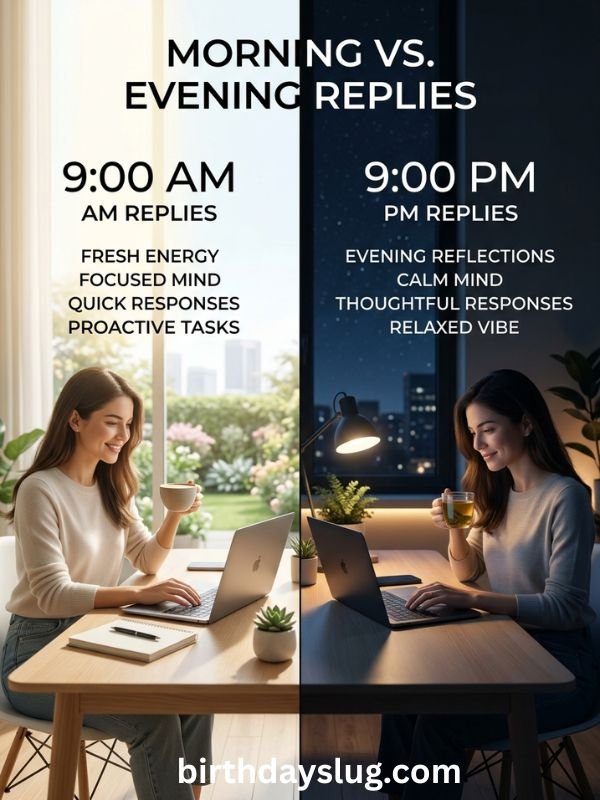
Time of day changes the natural response.
Morning: 90. “Just getting started — coffee in hand.” 91. “Still waking up, but optimistic about today.” 92. “Early, but off to a good start.”
Evening: 93. “Winding down now, it was a full day.” 94. “Almost done — ready to relax.” 95. “Long day, but a good one overall.”
Texting & Social Media Replies
Short, emoji-friendly answers built for fast-paced chats.
- “Goooood 😌 you?”
- “It’s a vibe today ✨”
- “Chaotic but fun lol”
- “Existing, mostly 😅”
- “Good good, just vibing rn”
Replies When You Don’t Want to Talk
Polite ways to keep boundaries without seeming rude.
- “It’s going, thanks — I’ll catch up with you properly later!”
- “Busy day, can’t chat much right now, but thanks for asking.”
- “All good, just heads-down at the moment.”
- “Fine, thanks — talk soon!”
Common Mistakes to Avoid
- Being too dry. A flat “fine” repeatedly can make you seem disengaged.
- Oversharing. Not every reply needs your full emotional history — match the depth to the relationship.
- Ignoring context. A flirty line to your boss or a stiff, formal line to your partner both land wrong.
- Repeating the same reply every time. Variety keeps conversations feeling genuine.
- Sounding uninterested. One-word answers with no follow-up question can come across as cold.
Pro Tips to Sound More Confident and Interesting

- Add a follow-up question. “Good, you?” keeps the conversation moving instead of ending it.
- Match their energy. If they’re upbeat, match it; if they’re low-key, don’t overdo enthusiasm.
- Keep it natural. Overly polished replies can feel scripted — a little imperfection reads as human.
- Use humor when it fits. A light joke can make you more memorable than a standard answer.
- Give a small detail. Instead of just “good,” mention one specific thing — it invites real conversation.
Alternative Ways to Answer the Question
If you want to break the pattern entirely, try:
- Turning it into a question: “Honestly, better now — what’s going on with you?”
- Adding a personal touch: “Good, just finished a workout and feeling great.”
- Brief storytelling: “It’s been interesting — had a funny moment at work I’ll tell you about.”
- Rephrasing creatively: “Cruising at a solid 8/10 today.”
Conclusion
“How is your day going?” is a small question with a lot of room to make an impression. The right reply depends on who’s asking, how you actually feel, and where you want the conversation to go next.
Keep a few go-to lines from each category above, adjust them to your own voice, and you’ll never be stuck with a boring “fine” again.
Frequently Asked Questions
What’s a good reply if I don’t want to share details?
Keep it short and redirect: “It’s going, thanks — how about you?” This stays polite without inviting more questions.
How do I reply flirtatiously without being too much?
Keep it light and playful rather than intense — something like “Better now that you texted” works well without overdoing it.
What should I say when my day is genuinely bad?
Be honest but brief: “It’s been a rough one, but I’m managing.” You don’t owe a full explanation unless you want to share it.
Is “good, you?” too boring to use?
It’s not wrong, but using it every time can feel repetitive. Adding a small detail or follow-up question makes it feel more genuine.
How do I answer professionally without sounding stiff?
Stick to short, positive, work-appropriate lines like “Going well, thanks — staying focused on today’s priorities.”



Pingback: 350+ Appreciation Message for My Daughter Birthday Wishes (Short, Long, Funny & Religious)